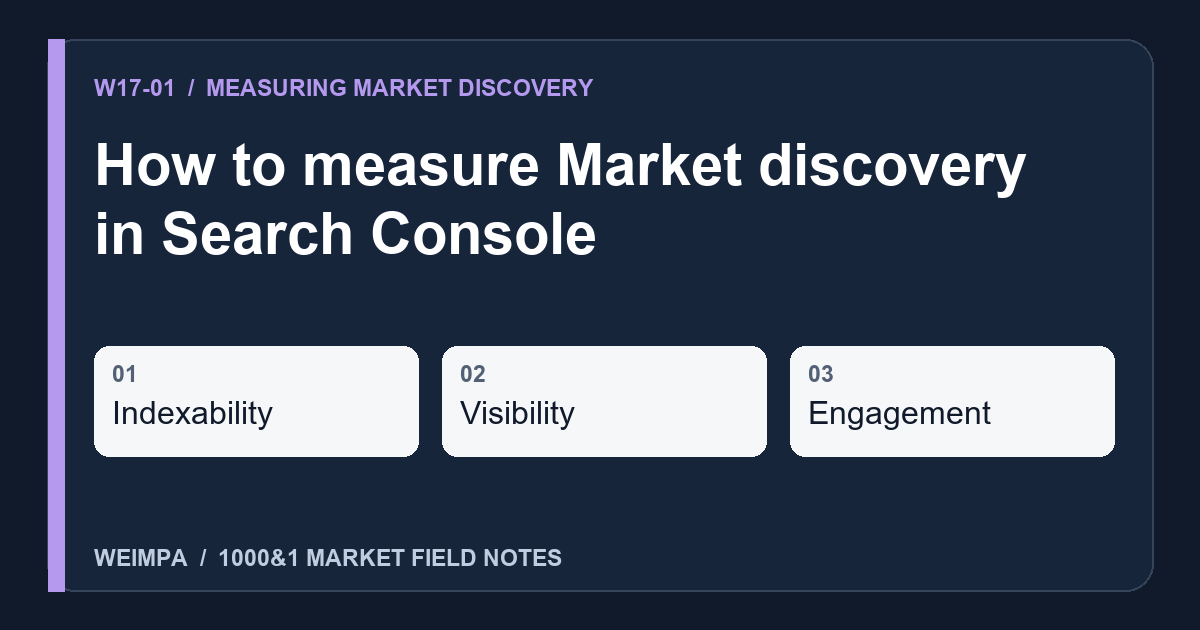
Measure from property to task
Fix a completed reporting window, search type and property. Record the property's clicks and impressions, then group actual page URLs by Market route and examine reported query families. A profile click has a different meaning from a broad category impression; neither is a sales measure unless a downstream event is recorded and attributable.
- Fix a completed date window and compare like-for-like periods.
- Group routes by cluster and inspect page, query and query×page cuts.
- Record index state and source coverage before calling a page a loser.
Page-cluster-query measurement worksheet
| Decision field | Record or rule |
|---|---|
| Indexability | is the page eligible and observed in search? |
| Visibility | impressions, query families and position by route. |
| Engagement | clicks and verified downstream actions when available. |
- 01Indexability
- 02Visibility
- 03Engagement
Keep eligibility in the worksheet
Before calling a cluster weak, check whether its pages were eligible to appear, how long they were live and whether query data is visible. In the owned 2–29 September export, agency1001.com has 7 clicks and 869 impressions and search1001.com has 4 and 704 at property level. The numbers establish a baseline for measurement design, not a ranking of all Market structures. Recheck like-for-like windows before changing routes.
To carry this decision forward, avoid false query attribution; inspect the owned evidence; decide what to change.
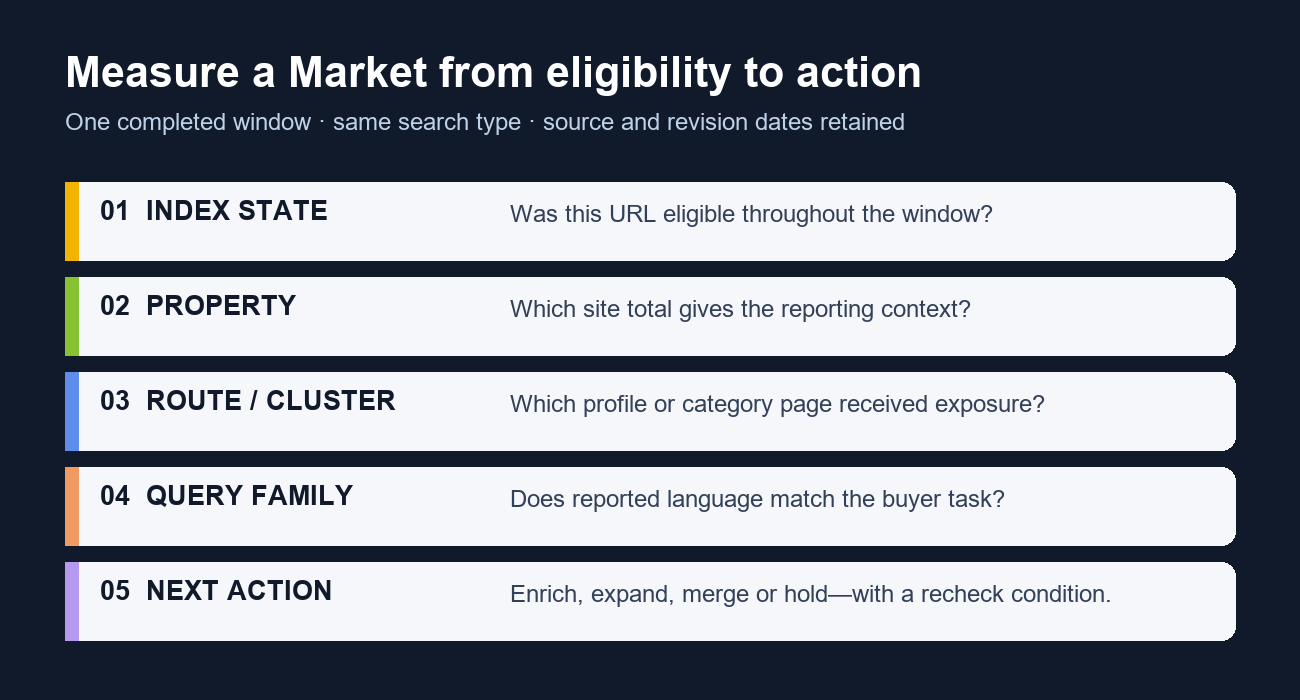
A measurement row for one route
For a profile route, record URL, cluster, index state, completed date window, clicks, impressions, reported query family and the buyer task the page should answer. Keep the property total above the route table as a coverage reference. If the query is named-entity navigation, do not treat it as evidence that a broad comparison page is succeeding. If relevant impressions rise but clicks do not, review the answer and snippet before generating more pages. The worksheet makes every metric point to a possible action.
The measurement worksheet should preserve route identity across updates. A category URL may be revised while the buyer task stays the same, or a profile may change source coverage without changing its slug. Record meaningful content revisions and index state beside metrics before comparing windows. If a page was noindex or unavailable for part of a period, treat the window as unsuitable for a simple performance comparison. That guard is essential before calling a cluster a winner or loser.
A zero-click route needs context
A zero-click page can still have relevant impressions; a click can still be irrelevant. Neither should be interpreted without query and page context.
References and source notes
- First-party GSC Search Analytics export, web, dataState=final, 2–29 September 2026; exact rows retained in the private evidence package
- Google Search Analytics API: dimensions and data limits
- Game Growth Market
- Search1001 Market
Original 1000&1 methodology reviewed and approved by the author. Public claims and historical measurements are bounded by the linked sources and dates.