Read each signal at its own level
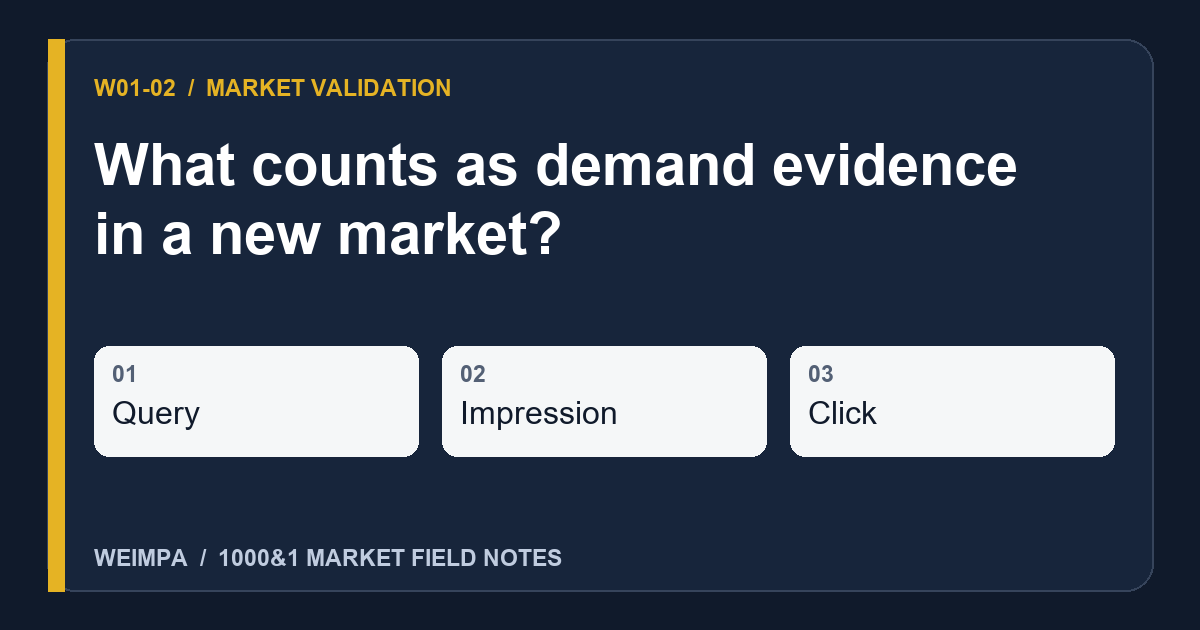
A query is evidence that someone used a phrase in Search; it is not a count of prospective customers. An impression means a result was displayed under Google's reporting rules. A click means a visit, whose commercial meaning depends on the page and the subsequent task. Even an apparently relevant profile click does not disclose the visitor's organization or purchase intent. Keep those observations in separate rows, with the property, page, query dimension, search type and completed date window attached.
- Capture the exact query, page, date window and search type for every quantitative claim.
- Classify the task behind the query: entity lookup, comparison, problem research or purchase consideration.
- Add an independent buyer-side check before committing to a commercial forecast.
Move from exposure to buyer evidence
For a validation decision, ask whether the observed task matches the intended buyer and whether an independent conversation, inquiry or workflow test supports it. The owned Lumos query-by-page row establishes that one profile was found through one reported query. It does not establish a lead. Comparing it with property totals is useful for coverage, but unattributed clicks must remain unattributed. This signal ladder is a guard against using early Search visibility as a revenue forecast.
To carry this decision forward, attribute a query to an actual page; return to the validation gate.
Signal ladder separating query visibility, intent and buyer action
| Decision field | Record or rule |
|---|---|
| Query | evidence of language and task, not automatically of spend. |
| Impression | evidence of exposure to a page in a defined report window. |
| Click | evidence of a visit, not a sales outcome. |
- 01Query
- 02Impression
- 03Click
A demand claim that survives review
Suppose a product profile appears for a named query and receives a click. The defensible sentence is that Search Console reported a click to that profile for that query and period. To claim a qualified buyer, a separate inquiry or conversion record would need to connect the visit to a buyer task. To claim a viable market, the team would also need supply quality, economics and repeatability. Each additional claim requires a different source. The signal ladder makes the missing steps visible and prevents one attractive Search row from carrying the weight of an investment case.
The part Search cannot see
GSC omits or anonymizes some query data. A property total may exceed visible query-row sums. Do not allocate that gap to a favorite query or participant.
References and source notes
- First-party GSC Search Analytics export, web, dataState=final, 2–29 September 2026; exact rows retained in the private evidence package
- Google Search Analytics API: dimensions and data limits
- Game Growth Market
- Search1001 Market
Original 1000&1 methodology reviewed and approved by the author. Public claims and historical measurements are bounded by the linked sources and dates.