Follow one profile's discovery path
A category route helps a buyer find a solution type; a named profile helps answer an entity question. The profile needs enough source-backed context to satisfy that visit: what the participant is, how it fits this Market and what remains to verify. A logo card cannot do this work even if it gets indexed.
- Make the entity identity and relation to the Market unambiguous.
- Support buyer-useful details with sources and an update path.
- Measure the exact profile URL rather than only the property aggregate.
Profile-to-query-to-click mechanism with owned examples
| Decision field | Record or rule |
|---|---|
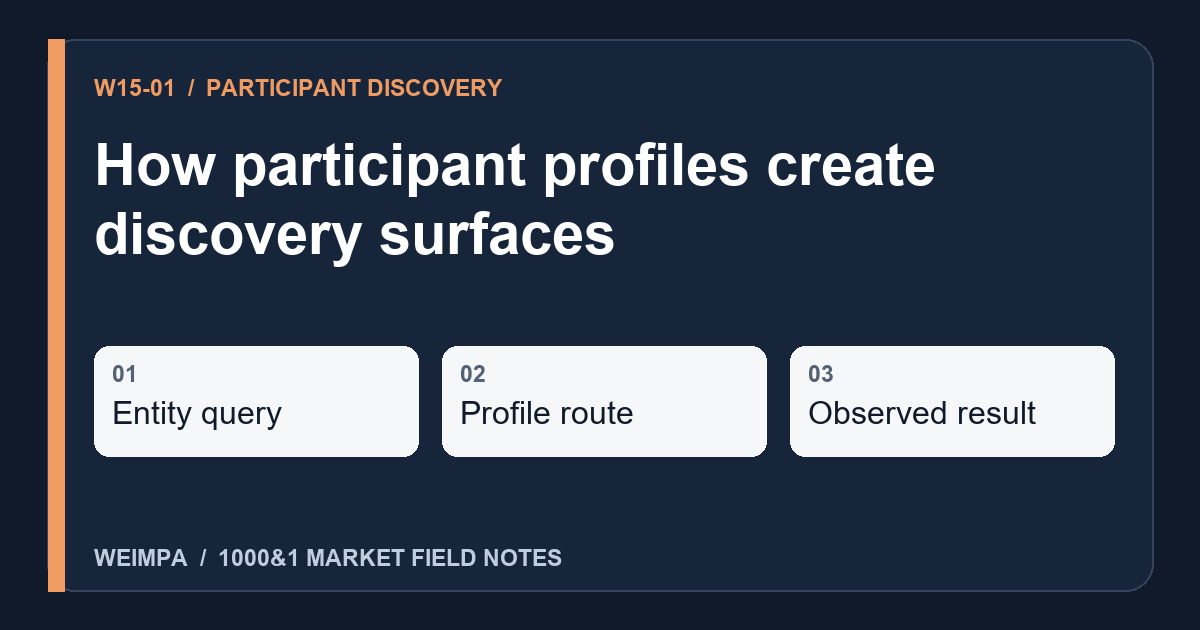
| Entity query | a person searches for a named product or company. |
| Profile route | the page provides attributable context. |
| Observed result | GSC reports exposure or a click for that route. |
- 01Entity query
- 02Profile route
- 03Observed result
Inspect the observed unit
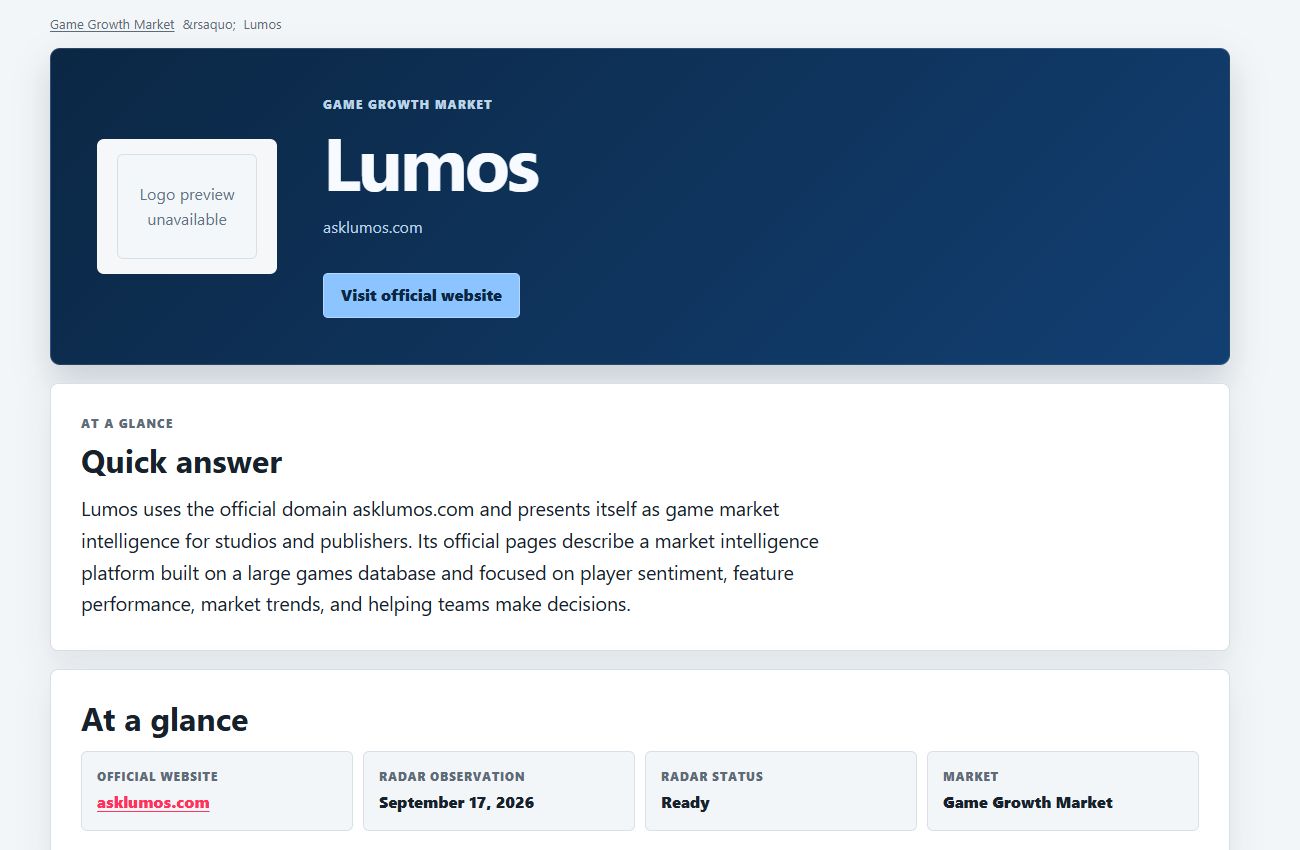
The owned agency1001.com export includes a Lumos query-by-page row with 2 clicks and 21 impressions for the reported window. It demonstrates one reported query-to-profile discovery path, not a universal profile conversion rate. Search1001 also exposes product profiles and category or capability routes, but its property totals must not be reassigned to a single product. The mechanism is plausible; the measurement remains narrow.
To carry this decision forward, check query-by-page attribution; measure the wider Market.
Read the Lumos path narrowly
The owned GSC export contains a reported query matching the Lumos profile URL and shows 2 clicks and 21 impressions for that pair in the completed window. That is an observed discovery event for one profile. The profile page itself must still provide a useful entity answer: identity, Market role, relevant capability and source context. A click to an empty card would be weak buyer value. The example supports designing substantive participant pages and a measurement route, while leaving visitor intent, inquiry and sales outcomes unclaimed.
The buyer-facing question after this observation is whether the profile answers the named lookup well enough to support further exploration. The query row cannot reveal dwell time or an inquiry, so the editorial audit should inspect the actual profile structure and the relevant source links. A category page may bring broader discovery, but the named profile has to earn its own usefulness. This keeps the article's conclusion at the level the evidence supports.
A profile click is not a lead
These examples establish that some specific profiles appeared and received clicks. They do not establish qualified leads, sales or universal participant traffic.
References and source notes
- First-party GSC Search Analytics export, web, dataState=final, 2–29 September 2026; exact rows retained in the private evidence package
- Google Search Analytics API: dimensions and data limits
- Game Growth Market
- Search1001 Market
Original 1000&1 methodology reviewed and approved by the author. Public claims and historical measurements are bounded by the linked sources and dates.