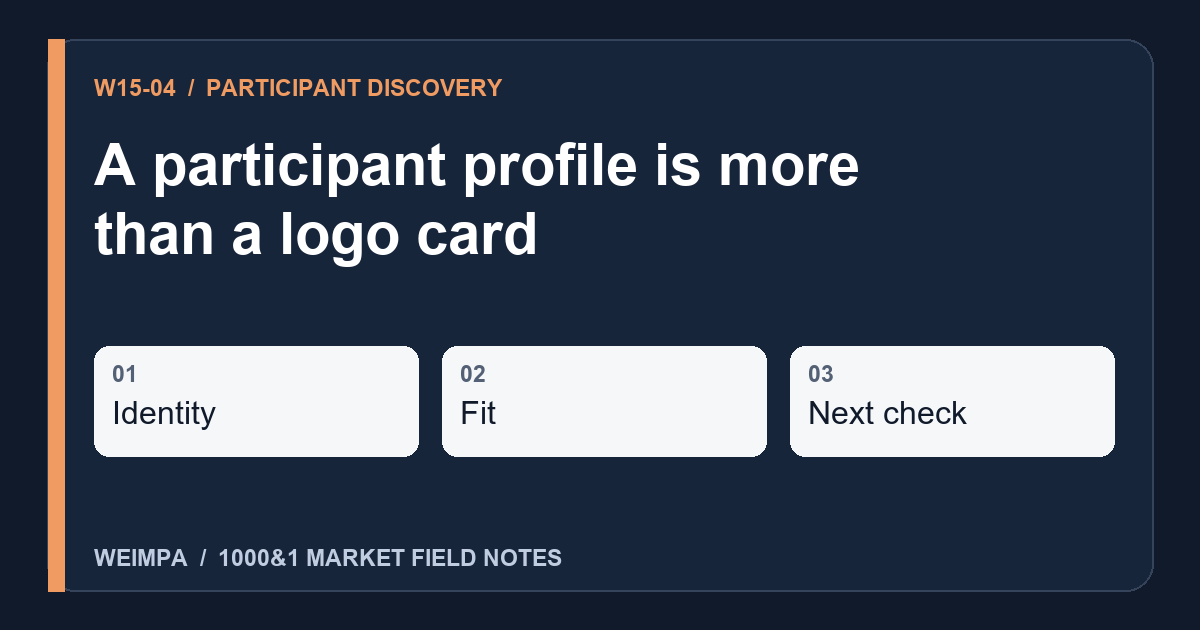
Audit the information behind the card
A profile should identify the participant, official source, relevant Market role, useful capabilities, limitations, update state and a verification path. A short teaser card may lead into that record, but it is not a substitute for one. Ask whether a buyer arriving from a named query can learn something beyond the vendor's slogan.
- Check identity, official source and relevant Market role.
- Describe the offering in terms of the buyer task and observable capabilities.
- Include update status, source links and a correction route.
Profile field quality audit
| Decision field | Record or rule |
|---|---|
| Identity | canonical name and domain, without unverified aliases. |
| Fit | why this entity appears in this Market and category. |
| Next check | what the buyer should verify directly with the provider. |
- 01Identity
- 02Fit
- 03Next check
Hold unsupported claims
Search1001's public guidance asks readers to verify current commercial details with vendors. Adopt the same line: organize public facts and explain the role, but do not invent test results, endorsements, pricing or customer outcomes. If sources only support identity, keep the profile limited or pending. A richer layout cannot repair a weak evidence base.
To carry this decision forward, connect profile quality to discovery.
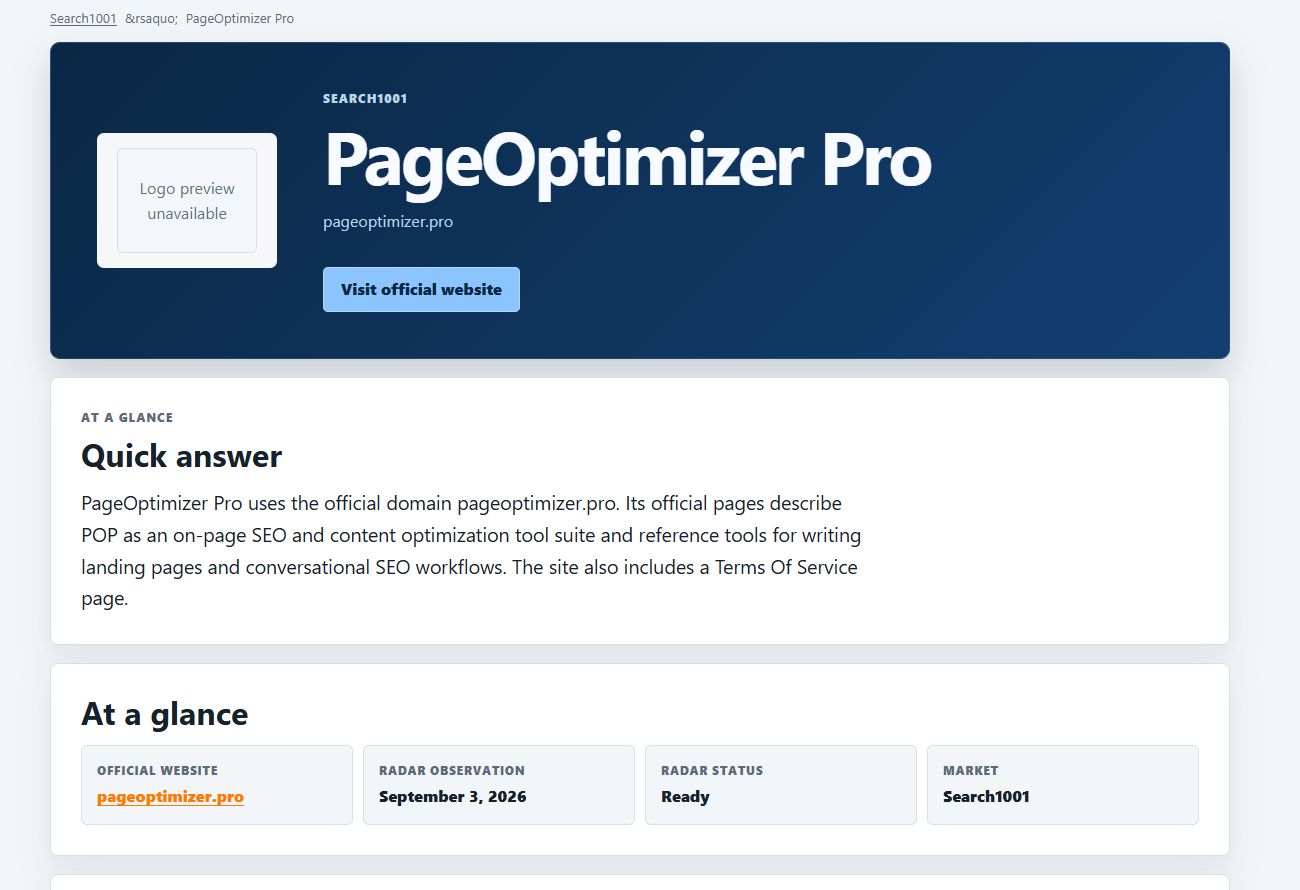
A profile audit question
Imagine arriving from a named product query. Can the page explain what the product does, why it is in this Market, which capabilities are source-backed and what still needs vendor confirmation? If it only repeats the logo and a tagline, it has not answered the visit. Audit the profile against the buyer task and hold unsupported fields rather than filling them with polished copy. Search1001's public product routes make this a concrete owned design question, not a generic SEO claim.
A polished card cannot replace sources
A profile must not invent test results, endorsements or pricing. When evidence is too sparse, the right choice can be to hold the profile.
References and source notes
Original 1000&1 methodology reviewed and approved by the author. Public claims and historical measurements are bounded by the linked sources and dates.